
A new era of clinical trials: uncovering efficacy signals hiding in plain sight | Altis Labs
Fully-Automated Prognostic Imaging Biomarkers in Advanced Solid Tumours using Deep Learning.
PROJECT METRICS
The Challenge
Cancer took an estimated 88,100 Canadian lives in 2024, with lung and colorectal cancer accounting for more than a third of those deaths. In response, researchers and drug developers worldwide are developing thousands of new innovative cancer treatments in hopes that some will work. But before regulators approve these therapeutics for general use, they must be evaluated through lengthy and costly clinical trials. A cancer treatment is ultimately evaluated for its ability to improve overall survival: do patients live longer after receiving a given treatment? However, assessing overall survival takes years, while cancer continues to affect patients’ lives day after day. To expedite this process, trials rely on earlier endpoints, such as tumour response and progression-free survival, which measure whether a handful of selected tumours shrink or grow on routine CT scans. Tumour measurement offers a standardized, early indication of drug activity. It does not accurately predict whether the treatment will prolong survival, particularly with newer treatments such as immunotherapies. This outlines a clear gap in cancer research, as drug developers face significant uncertainty throughout the 10+ years it takes to run Phase I, II, and III clinical trials and measure survival benefit. Since only 6% of cancer drugs entering clinical trials ever achieve approval, the over $2 billion cost to develop a new cancer drug is primarily driven by the high clinical trial failure rate. An AI endpoint that predicts survival benefit earlier would help cancer researchers and drug developers accelerate development of drugs that are more likely to work, while discontinuing inefficacious programs earlier. However, developing such an AI model requires large volumes of patient data linked to long-term survival outcomes across several types of cancer. That data exists in cancer centres across Canada, but it remains fragmented across institutions.
The Solution – INOVAIT Project
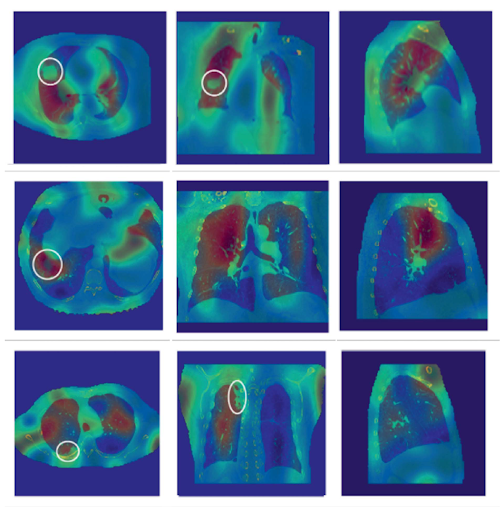
Altis Labs recognized that every radiology scan in a clinical trial captures far more than the size of one or two tumours. These scans also show the full extent of disease burden, along with changes in organ function, muscle mass, and cardiovascular health, painting a clearer picture of a patient’s physical condition and how they are responding to treatment. To put this data to work, Altis developed IPRO (imaging-based prognostication), an AI model that analyzes entire scans, quantifying thousands of imaging features, to predict each patient’s survival at every imaging timepoint. The company first tested the approach in early-stage lung cancer through the INOVAIT Pilot Fund, developing deep learning models that, combined with standard staging, improved survival prediction in more than 1,100 lung cancer patients, with results published in JCO Clinical Cancer Informatics. Early-stage lung cancer, however, was only a starting point as cancer treatments are tested across various tumour types. Expanding IPRO’s coverage beyond early-stage lung cancer required large imaging datasets linked to patient outcomes, which were locked within hospitals across the country. With support from the INOVAIT Focus Fund, Altis set out to unlock that data through a pan-Canadian coalition with University Health Network, Sunnybrook Research Institute, BC Cancer, Trillium Health Partners, the University of Calgary and Bayer Canada. Drawing on Canadian institutions and safeguarding patient data with established governance through research ethics approvals, data sharing agreements and de-identification at each institution, Altis is training and validating IPRO on representative Canadian datasets. Through this coalition, IPRO has expanded to advanced non-small cell lung cancer, small cell lung cancer, and colorectal, breast, prostate and liver cancers. From a pilot project in early-stage lung cancer to a national coalition spanning multiple cancer types, Altis has turned early-stage support into lasting momentum. In a post-hoc analysis of the Phase III MARIPOSA lung cancer trial with Johnson & Johnson, IPRO analyzed roughly 15,000 CT scans and detected efficacy 11 months before the trial’s primary progression-free survival readout and 26 months before final overall survival results. Objective Response Rate, the most common endpoint used in cancer trials, failed to anticipate the new treatment’s 12-month survival benefit altogether. In September 2026, the company announced a US$25 million Series A financing co-led by OrbiMed and Qiming Venture Partners USA, two of the world’s leading healthcare investors, to expand IPRO to additional cancer types and scale its use with global biopharmaceutical partners. As the Focus Fund project continues its work in breast, prostate and liver cancer, IPRO moves closer to a new era of oncology trials in which AI endpoints help bring effective therapies to Canadian patients sooner.
Funding Type: Focus Fund
Year of Funding: 2023
INOVAIT Funding Amount: $1,997,919.94
Total Project Funding Amount: $5,993,759.78
Altis Labs
Altis Labs is a Toronto-based company developing AI endpoints to accelerate clinical trials. Founder and CEO Felix Baldauf-Lenschen started Altis in 2019 on the premise that AI's greatest potential lies in generating better evidence, faster. Since then, and in close partnership with leading Canadian cancer centers, Altis has trained IPRO, its prognostic AI model, on the industry’s largest multimodal oncology database comprising longitudinal imaging, molecular, clinical, and outcomes data spanning over 500,000 patient-years. This work has drawn collaborations with biopharmaceutical companies including Johnson & Johnson Innovative Medicine, AstraZeneca, Bayer, Merck, and others. Altis has also earned INOVAIT’s 2025/26 Maple Leaf Award, recognizing its strengthened partnerships with companies and institutions across Canada.

"INOVAIT’s support came at a pivotal moment for Altis Labs. The Focus Fund brought leading Canadian cancer centres and industry together around a shared goal: using existing oncology data to measure what matters most to patients, which is whether a treatment helps them live longer. The datasets and partnerships built through this project are now the foundation for how we bring IPRO to cancer researchers in Canada and around the world, and a strong example of what Canada’s health innovation ecosystem can achieve when institutions work together."

Felix Baldauf-Lenschen
Founder and CEO
Altis Labs